Why .auDo exists
.auDo is an R&D observatory built around a simple premise:
the .au namespace is not just technical infrastructure. It is part of
the public-facing trust layer of Australian organisations, and it deserves to be
observed more carefully over time.
This page explains the thinking behind the project, what it is observing, and why domain governance matters in public life.
The idea
When people talk about domain names, the conversation usually collapses into administration: renewals, registrars, DNS records, and transfer problems when something breaks.
But that framing is too small.
A domain is not only an asset on a register. It is a public trust signal. It shapes whether a service looks legitimate, whether email feels safe to open, whether a customer believes they are in the right place, and whether an organisation appears in control of its own digital edge.
That is the premise behind .auDo - short for AU Domain Observatory.
Why build an observatory at all?
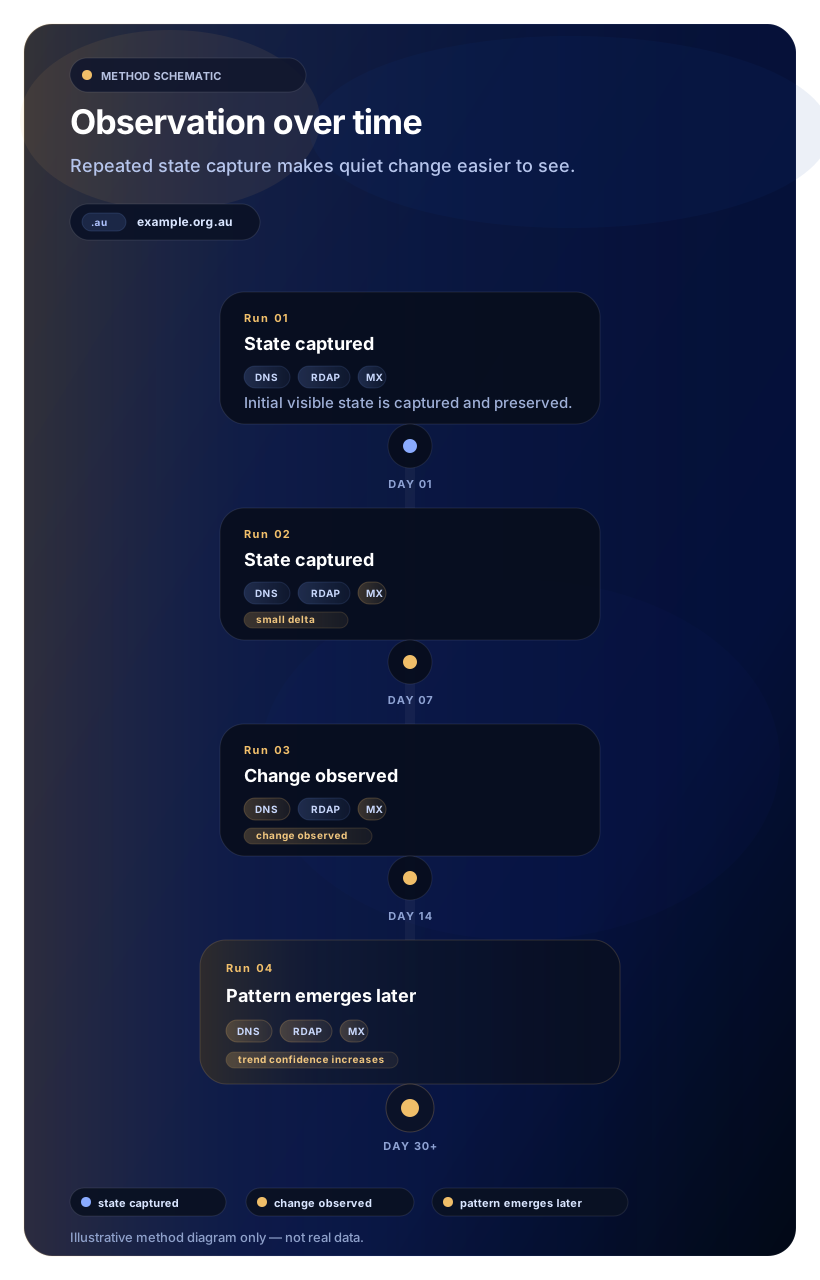
Because a lot of important change happens quietly.
Nameservers move. Hosting patterns shift. Certificates appear. Records change. Control moves from one provider to another. Sometimes those changes are routine. Sometimes they are signals of growth, neglect, outsourcing, migration, or risk.
Taken one at a time, they can look trivial. Taken together, over time, they start to describe something more useful: how digital authority is actually being maintained.
That matters because the .au namespace sits closer to public life than many teams like to admit.
It is where government, health, education, community organisations, businesses, and essential services
present themselves to the world.
What .auDo is trying to do
At its core, .auDo is an attempt to build better observational discipline.
It is not another scanner pretending to be intelligence, and not a platform claiming certainty from a handful of lookups.
The project asks a simpler set of questions:
- What can be learned by watching the
.aunamespace carefully, over time? - What operational patterns become visible when change is recorded instead of guessed?
- Which shifts are ordinary maintenance, and which deserve closer attention?
- What does trust look like when viewed through domain governance rather than marketing language?
The focus is less on whether a domain looks polished, and more on whether it appears governed: who holds authority, who can change it, which providers are involved, and what signs of continuity, neglect, or fragmentation sit in plain sight.
Why this matters
Not every domain change is a public event. But the namespace itself has public-interest value.
The domain layer sits underneath everyday trust: URLs, email addresses, logins, support channels, service portals, and brand presence. When it is well governed, almost nobody notices. When it is weak, people often only notice after trust has already broken.
.auDo treats that layer more seriously - not as administrative plumbing, but as part of the public surface through which trust is continuously earned, weakened, or lost.
What I hope .auDo proves
I want to test whether a domain observatory can do three useful things:
- Surface patterns early - drift, concentration, churn, sudden change, and long-tail neglect.
- Improve digital trust literacy - helping people understand the domain layer as a chain of authority, not just a web address.
- Support better questions - who owns this, who operates it, what changed, is that normal, and what does it imply?
In that sense, .auDo is part research project, part observatory, and part discipline.